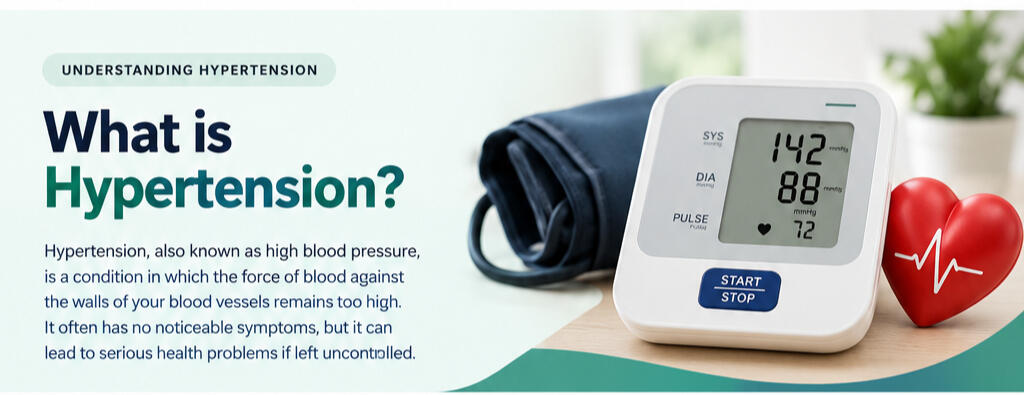
Know Your Numbers
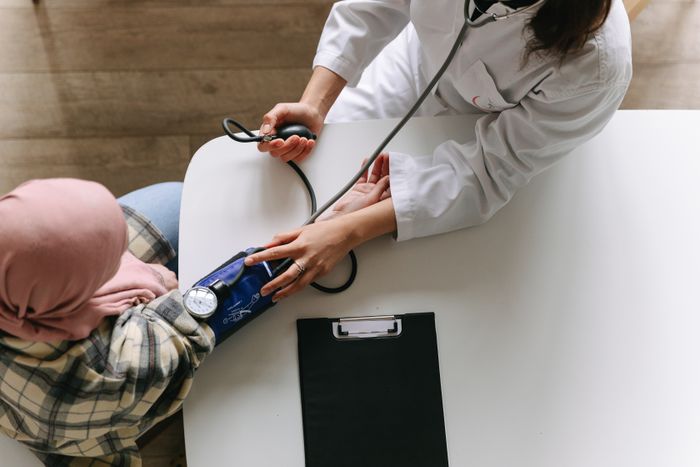
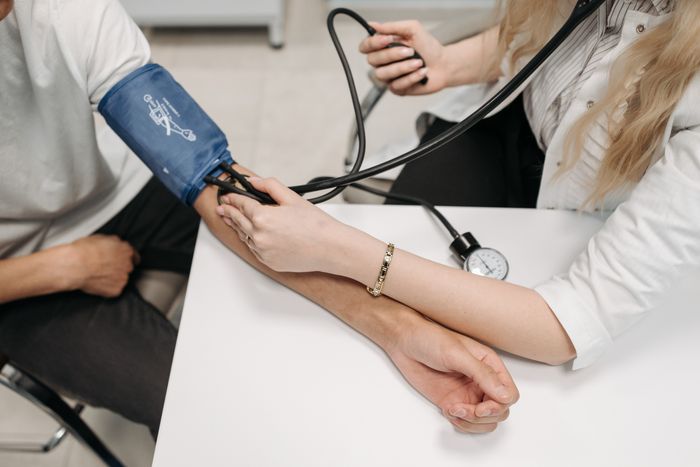
Understand your blood pressure reading.
Systolic: pressure when your heart beats.
Diastolic: pressure between heartbeats.


About PressureCare
PressureCare is a student educational project designed to promote awareness of hypertension and encourage medication adherence. It provides accessible health information on understanding high blood pressure, measuring and monitoring blood pressure, managing hypertension, and taking prescribed medication consistently. Through practical guidance, myth-busting facts, reliable resources from WHO, CDC, and NHS, and support strategies, PressureCare aims to empower individuals to make informed decisions and take an active role in protecting their heart health.

Understanding Hypertension

Understand your blood pressure reading.
Systolic: pressure when your heart beats.
Diastolic: pressure between heartbeats.
Small daily steps can help protect your future.
High blood pressure can damage blood vessels and strain the heart.
Managing blood pressure helps reduce the risk of stroke.
Healthy blood pressure helps protect your kidneys from damage.
Long-term high blood pressure can damage blood vessels in your eyes.
Hypertension often has no symptoms. If a reading is above 180/120, repeat it after at least one minute. If it remains that high, seek immediate medical advice. If you have chest pain, shortness of breath, weakness, numbness, vision changes or difficulty speaking, seek emergency care.
Educational information only. This section does not replace professional medical advice, diagnosis or treatment. Never stop or change prescribed medication without speaking to your healthcare professional.
Know what to look out for and when to seek help.
You may feel completely well even when your blood pressure is high. Regular blood pressure checks are the best way to detect it.
May occur, but headaches alone do not indicate high blood pressure.
Blurred vision can occur in some severe cases.
Can indicate a serious problem and needs urgent assessment.
Requires emergency medical attention.
Seek emergency care for chest pain, severe difficulty breathing, sudden weakness, difficulty speaking, or sudden vision changes. Do not wait for a blood pressure reading before getting help.
Managing high blood pressure starts with small, consistent steps. Taking your medication as prescribed helps you control your blood pressure and protect your heart, brain, kidneys, and overall health.
Follow your healthcare professional's instructions, even when you feel well.
Use a daily reminder, pill organiser, or medication chart to help you remember.
Record your readings and share them with your healthcare professional.
Speak to your healthcare professional if you experience side effects or have concerns.

Every time you follow your treatment plan, you take another positive step towards protecting your health.
Why does medication adherence matter?
Medication adherence means taking your medicine according to the instructions agreed upon with your healthcare professional.
Taking medication correctly can help keep your blood pressure under control and reduce the risk of various complications

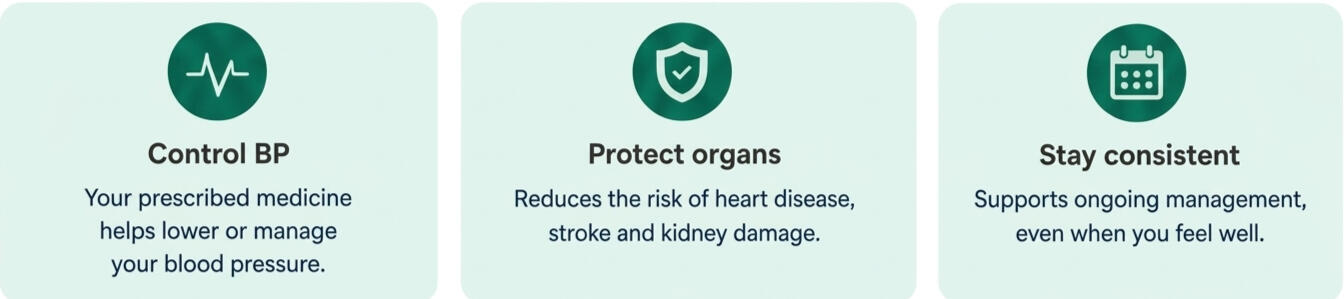
Taking medication as prescribed helps maintain blood pressure within the target range. This reduces the strain on your heart and blood vessels.

Consistent treatment helps lower the risk of heart attack, heart failure and other complications associated with uncontrolled high blood pressure.

Keeping blood pressure controlled helps protect the blood vessels supplying your brain and reduces the risk of a stroke.

High blood pressure can damage the kidneys over time. Following your treatment plan helps reduce this risk.

Taking medicine as prescribed, monitoring your blood pressure and attending check-ups can help you stay healthier over the long term.
Important: Do not stop or change your medication without speaking to your healthcare professional.
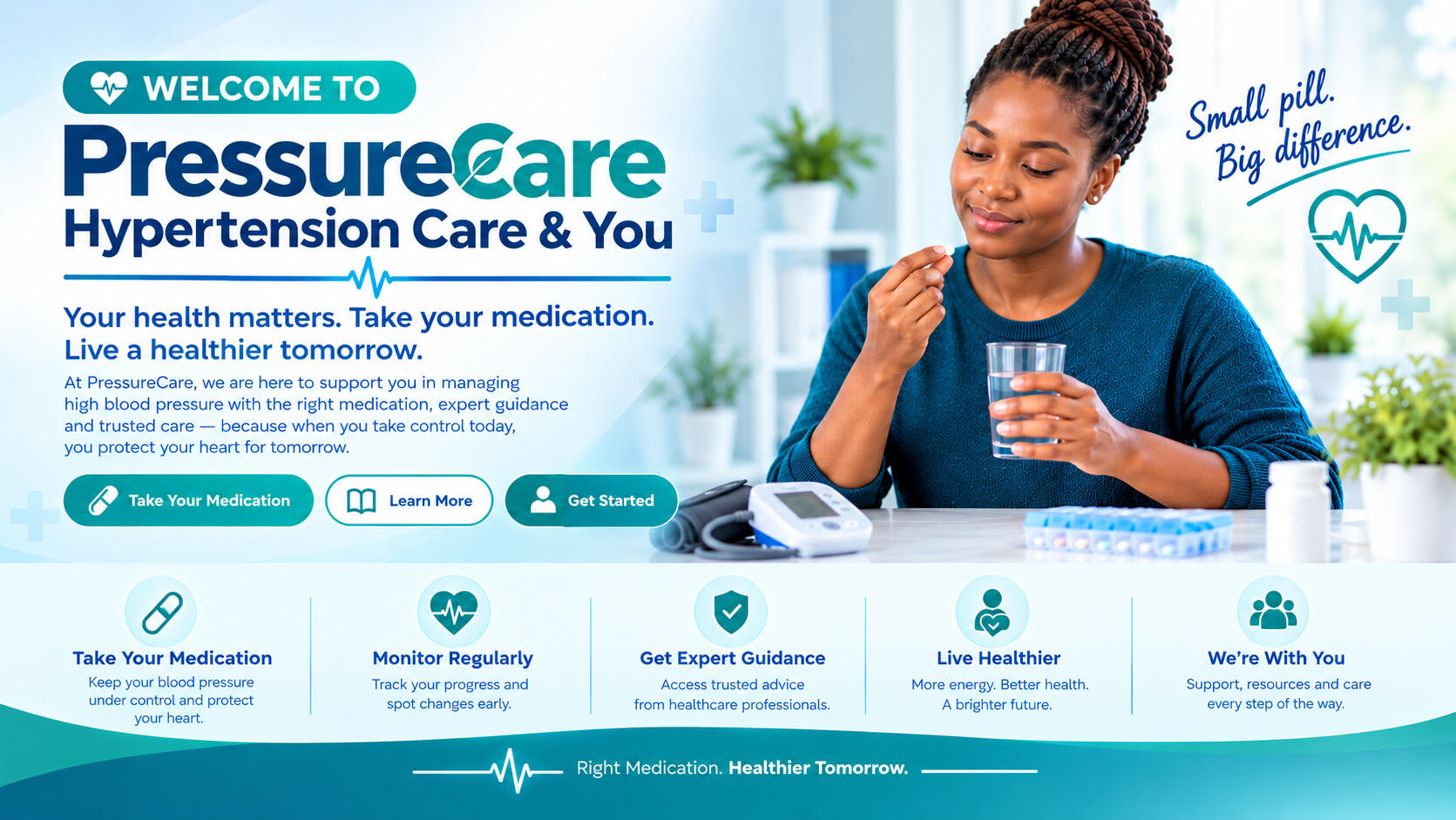
Take your medication as prescribed. Monitor your blood pressure regularly. Seek expert guidance when you need help.
The right medication. A healthier tomorrow.
7 Ways to remember your medication
Simple strategies can make it easier to take your medication regularly
Simple ways to make taking your blood pressure medication part of your everyday routine.
Use a phone alarm, calendar notification or reminder note to help you remember.
Take your medicine at the prescribed time. Link it to a regular daily activity.
Keep track of your doses with a suitable pill organizer and store medicines safely.
Check your medicine supply regularly and plan prescription refills early.
Understand what each medicine does, how to take it and which side effects to discuss.
Ask a trusted family member or caregiver to help with reminders or appointments.
Keep a medication checklist and record your blood pressure as advised.
Everyone faces different challenges. Recognizing yours is the first step towards finding a solution.
“I keep forgetting.” — Try alarms, a checklist or a daily routine.
“I feel fine.” — High blood pressure may have no obvious symptoms.
“My medicine worries me.” — Talk to a healthcare professional about side effects.
“I cannot afford it.” — Ask a clinic or pharmacist about affordable options.
“I have run out.” — Contact your clinic or pharmacy to arrange a refill.
Never stop taking prescribed blood pressure medication simply because you feel better. Do not change your dose without professional advice.
If you miss a dose, follow the instructions for your medicine or ask a pharmacist. Do not double your dose unless a qualified healthcare professional specifically instructs you to.
Tick each step as you prepare to manage your treatment.
Every small step counts. Keep going!
Take your medication as prescribed. Monitor your blood pressure regularly. Seek expert guidance when you need help.
The right medication. A healthier tomorrow.Educational information only. It does not replace advice from your doctor or pharmacist.
Click subscribe to get reminders and updates from PressureCare
Enter your details below to receive reminders and updates from us.
Break The Stigma
The more you understand Hypertension, the less the room for stigma
There are many misconceptions about blood pressure medication. Discover the facts and learn how to take control of your health.
High blood pressure often has no noticeable symptoms. Your medicine may be working even when you feel healthy. Continue taking it as prescribed to help control your blood pressure.
Normal readings may mean your treatment is working. Many people need long-term medication to maintain control. Never stop or change your treatment without consulting your healthcare professional.
Blood pressure fluctuates throughout the day. Taking medicine only when a reading is high may leave your hypertension uncontrolled. Follow your prescribed schedule, even when your readings are normal.
Some medicines require kidney-function monitoring, but many blood pressure medicines can help protect kidney health by controlling hypertension. The effects depend on the medicine and the individual. Discuss your concerns with your healthcare professional instead of stopping treatment yourself.
Healthy eating, regular physical activity, reducing salt intake and maintaining a healthy weight can improve blood pressure control. However, lifestyle changes may not replace medication. Continue your prescription unless your healthcare professional adjusts it.
Repeated missed doses can make blood pressure harder to control. Use phone alarms, a pill organiser or a daily routine to remember your medication. If you miss a dose, follow the medicine instructions or ask a pharmacist what to do. Do not double your next dose unless specifically instructed.
Your healthcare professional may be able to adjust your dose or recommend an alternative medicine. Report side effects promptly rather than stopping treatment without advice. Seek urgent medical attention for severe or potentially dangerous symptoms.
Some herbal and traditional remedies can interact with prescribed medicines or affect blood pressure. Tell your healthcare professional about all the products you use. Do not replace prescribed treatment without medical advice.
Cost and medicine shortages can make taking medication difficult, but help may be available. Speak to your clinic or pharmacist about affordable generic alternatives, refill planning or local assistance. Do not ration or stop your medicine without seeking advice.
Home monitoring helps you track your progress, but regular follow-up appointments remain important. Your healthcare professional can assess treatment effectiveness, review side effects and decide whether changes are needed.
Take your medication as prescribed, monitor your blood pressure and attend your follow-up appointments. If you have concerns, talk to your healthcare professional.
PressureCare provides educational information and does not replace professional medical advice.
LEARN MORE
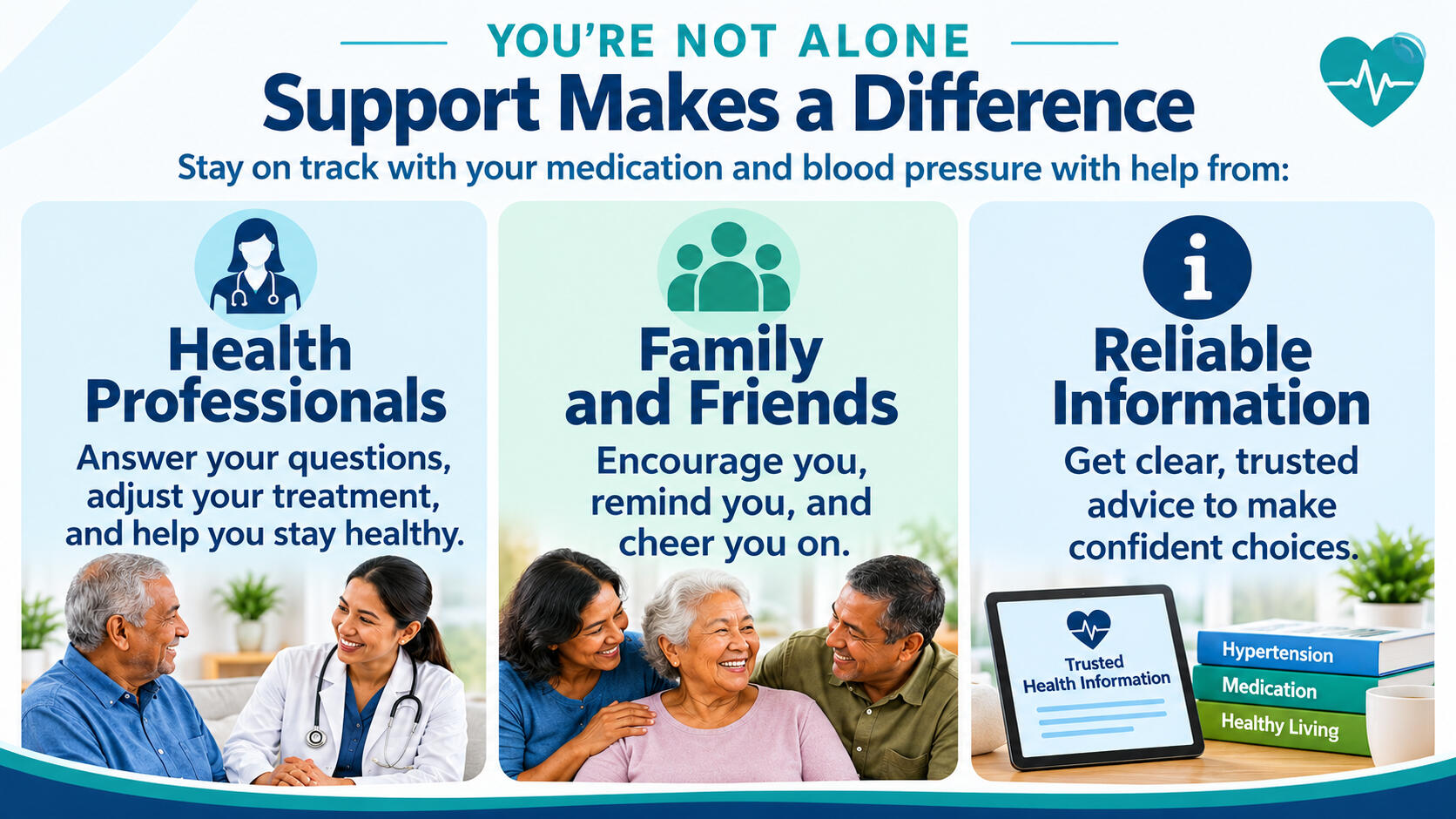
Reliable information can empower you
Learn about hypertension, monitor your blood pressure, and discover how to stay consistent with your medication.
Understand what high blood pressure is, why it matters, and why regular checks are important even when you feel well.
Learn how to measure blood pressure correctly, prepare for a reading, and keep track of your results.
Explore healthy habits, treatment options, follow-up appointments, and ways to help control your blood pressure.
Discover why taking prescribed medication consistently matters and what to do when you experience difficulties or side effects.
We would love to hear from you, Get in touch with PressureCare